if I only do one thing this month . . .
April 2008
 April's one-thing is simple, quick, and good on so many different levels. Its so simple that you may not consider it a green project, but it is. Open your windows. That's it. Spring is here and your home has been shut up all winter long. According to the American Lung Association, "American adults spend about 90% of their time indoors, and thanks to our more tightly insulated/sealed homes and workplaces, the concentration of pollutants indoors may be even higher than outdoors." There are a number of ways to treat indoor air but the best way is to open the windows and let the breeze clean your air naturally and energy free. Its good for the health of your family, the environment, and your pocket book plus it reduces wear and tear on your HVAC systems. To go one step farther, as the days warm up, install and use ceiling fans.
March 2008
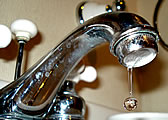
For March we take a tip from Innovative Home magazine's Winter 2007 article Small Wonders to help us save water from now on with just a slight adjustment in routine and a few minutes worth of light work.
"According to Ed Del Grande, author of Ed Del Grande's House Call and home improvement expert for Kohler Co., 'Cutting down your family's shower time by just five minutes can save hundreds of gallons of water a week!' Conserve even more water by installing a performance showerhead that uses 2.5 gallons of water or less."
"Go One Step Greener: Reduce annual water consumption by half by placing a water-saving aerator on all household faucets. 'These easy small changes to your fixtures and lifestyle can save thousands of gallons of water a year,' says Del Grande"
February 2008
For February we turn to the kitchen and what better place to start than the refrigerator. This tip comes from the DOE's Energy Savers web site.
Don't keep your refrigerator or freezer too cold. Recommended temperatures are 37° to 40°F for the fresh food compartment of the refrigerator and 5°F for the freezer section. If you have a separate freezer for long-term storage, it should be kept at 0°F.
To check refrigerator temperature, place an appliance thermometer in a glass of water in the center of the refrigerator. Read it after 24 hours. To check the freezer temperature, place a thermometer between frozen packages. Read it after 24 hours.
January 2008

In case you haven't noticed, and I'm sure you have, winter has arrived in West Virginia and you know what that means, the average home is leaking warm air into the cold, cruel world like a sieve. You can't fix the problem until you know what it is so this month, if you can only do one thing, find where you're leaking that costly warm air. Actually it simpler than you may think and you don't have to have a professional blower door test performed to find the problem spots. Just follow these easy steps.
- Turn down your furnace enough so that it doesn't come on during the test. Windy, cold days are the best.
- Be sure all windows and doors are firmly shut.
- Turn on all exhaust fans that blow air out (normally bathroom and kitchen vents).
- Light an incense stick and pass it around the edges of common leak sites. Wherever the smoke is sucked out of or blown into the room, there's a draft.
Take a notepad around with you to keep a record of the leaks. Now you're ready to start tightening that house envelope. For a complete rundown of detecting air leaks and weatherizing your home, check out the U.S. Department of Energy's Energy Efficiency and Renewable Energy website.
December 2007
 It's holiday time in Morgantown and we have three very simple things to do to make your Christmas greener and cleaner. First, if you're buying lights for the tree, buy decorative LED lights. They're 90% more efficient than conventional incandescent bulbs, last longer, and are cooler to the touch. Second, instead of shrouding packages in one-use, rip-and-trash wrapping paper, do what more and more people are doing and wrap your packages in disused newspapers. We've been wrapping ours in the colorful Sunday funny papers for years. If your family and friends question your sanity, make it a teachable moment. That'll show 'em. Third, go natural with your Christmas tree. There's nothing like the smell of a real Christmas tree in the house. Make it a family event to go out and cut your own then mulch it after the holidays. Better yet, buy a bulbed tree and replant it later. Learn more about using live Christmas trees at This Old House.
November 2007
 For the month of November we have a very easy, eco-project that anyone can implement immediately and will start helping today. Go to your kitchen cupboard and pull out a small plastic cup. Take it to your bathroom sink and leave it there. Now, each time you brush your teeth start by filling the cup. When you wet your toothpaste-crested toothbrush, turn the water off and rinse using the water in the cup. Don't run the water when you rinse and what ever you do don't run it while you're actually brushing your teeth. Good for the environment and your wallet. After all, we used to do this in America in the 40's and 50's. I know because I've seen the old movies. So here's your chance, start saving your part of the world right now starting in the bathroom.
October 2007
 You need to get started somewhere so for the month of October, if you do only one thing to start creating your greener home replace 5 of your most used lights with compact flourescent light bulbs (
Like mercury thermometers, cfl's contain small amounts of mercury. The difference is that it would take 100 CFLs to equal the amount of mercury in one thermometer and this amount was estimated to have dropped by the end of 2007.
If you break one you should open a window and leave the room for 15 minutes. Then, wearing disposable gloves, scoop up the pieces using a stiff piece of paper or cardboard and place everything into a sealable plastic bag. Do not use a vacuum cleaner or broom. Wipe down the area with a wet paper towel or disposable wet wipe and put that in the plastic bag. If you have carpet, use sticky tape like duct tape to clean up the area. Put the gloves in the bag and put that into a second sealable plastic bag. Then place all of this outside into the trash for the next pick up. Wash your hands. To learn more read What to Do if a Fluorescent Light Bulb Breaks from the Energy Star website.